Assistive Listening Technology for Clearer Communication
Hear Room provides independent advice on technology that supports listening, communication and everyday accessibility. From remote microphones and TV listening systems to Auracast™, captioning and alerting devices, we help you explore options suited to your needs.
Whether you use hearing aids, cochlear implants or neither, we consider your listening environments, device compatibility, ease of use and budget.
Based in Loganholme, we support individuals, schools, workplaces and organisations throughout Brisbane and across Australia.
What is assistive listening technology?
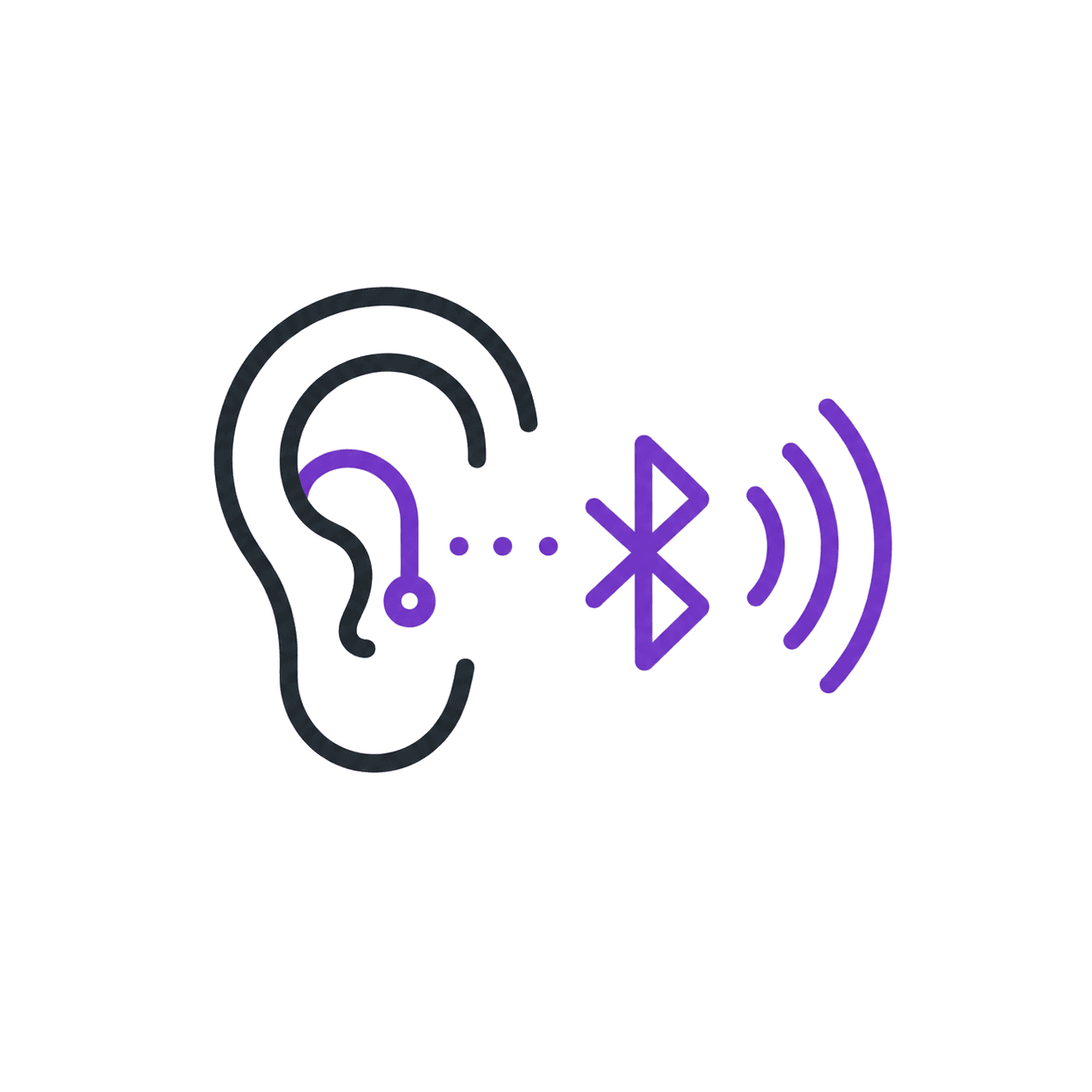
Assistive listening technology helps people hear speech and other audio more clearly, particularly when background noise or distance makes listening difficult.
Examples include remote microphones, TV listening systems and personal listening devices.
Some systems work with compatible hearing aids or cochlear implant processors. Others provide sound through headphones, earbuds or dedicated receivers.
Other accessibility tools support communication in different ways. Live captions display spoken words as text, while visual and vibrating alerts can draw attention to doorbells, telephone calls and alarm clocks.
Explore listening and accessibility solutions
TV Listening and Home Alerting
TV listening systems can deliver audio to compatible hearing aids, headphones or personal receivers, helping you choose a listening level that suits you.
Visual and vibrating alerting devices can provide additional ways to notice doorbells, telephone calls and alarm clocks.
Hear Room helps you compare suitable options, check compatibility and choose practical solutions for your home, daily routines and budget.
Remote Microphones for Conversations, Work and Learning
Remote microphones capture speech close to the speaker and send it to a compatible hearing device or listening receiver. This can help when distance or background noise makes speech harder to follow.
Hear Room provides independent advice on remote microphone options, including Phonak Roger™, for conversations, meetings, classrooms and other listening situations.
We check your hearing technology and any receiver or accessory requirements, then help you understand how to position and use the microphone effectively.
Auracast™ Broadcast Audio
Auracast™ broadcast audio uses Bluetooth® LE Audio to send sound from an enabled television, venue sound system or other transmitter to compatible hearing aids, earbuds and headphones.
Multiple people can listen to the same broadcast through their own compatible devices. Having Bluetooth alone does not mean a device supports Auracast.
Hear Room provides independent advice on Auracast for home listening, workplaces and public venues. We help you check device compatibility, understand equipment requirements and plan a practical listening solution.
Live Captioning and Speech-to-Text
Live captions turn spoken words into text on a screen. Depending on the device or application, they can support face-to-face conversations, online meetings and video content.
Automatic captions can make mistakes. Background noise, microphone position and people speaking at the same time can affect accuracy.
Hear Room helps you explore captioning options suited to your communication needs. We consider device compatibility, ease of use, privacy settings and the environments where you want to use captions.
Personal Voice Amplifiers
Personal voice amplifiers use a microphone and portable speaker to make the user’s voice easier to hear. They can support teachers, presenters, tour guides and people with quieter voices.
Hear Room provides advice on options including ChatterVOX®, considering microphone comfort, portability, listening distance and the environment where you will use the system.
We help you choose a suitable setup and understand microphone positioning and volume settings for everyday use.
Classroom Soundfield Systems
Classroom soundfield systems use a teacher’s microphone and one or more loudspeakers to distribute speech more evenly across the room.
They help make spoken instruction easier to hear while allowing teachers to use a natural speaking voice.
Hear Room helps schools assess their classrooms and compare suitable systems. We consider room acoustics, student listening needs and how classroom audio can work with individual students’ hearing technology.
Our support includes system selection, setup, staff training and ongoing advice.
Assistive Technology FAQs
Need help choosing assistive technology?
Tell us where listening or communication is difficult and what you would like to improve. Hear Room can help you compare suitable options, check compatibility with your existing devices and plan a practical solution for home, school or work.