Hearing Augmentation Solutions for Accessible Communication
Whether you're designing a new building, upgrading an existing facility or improving accessibility for people with hearing loss, the right hearing augmentation system can make all the difference.
Hear Room provides independent advice, system design, commissioning and ongoing support for hearing augmentation systems across Australia, including education, workplaces, public buildings, healthcare and community spaces.
Independent advice. Better accessibility. Better communication.
What is Hearing Augmentation?
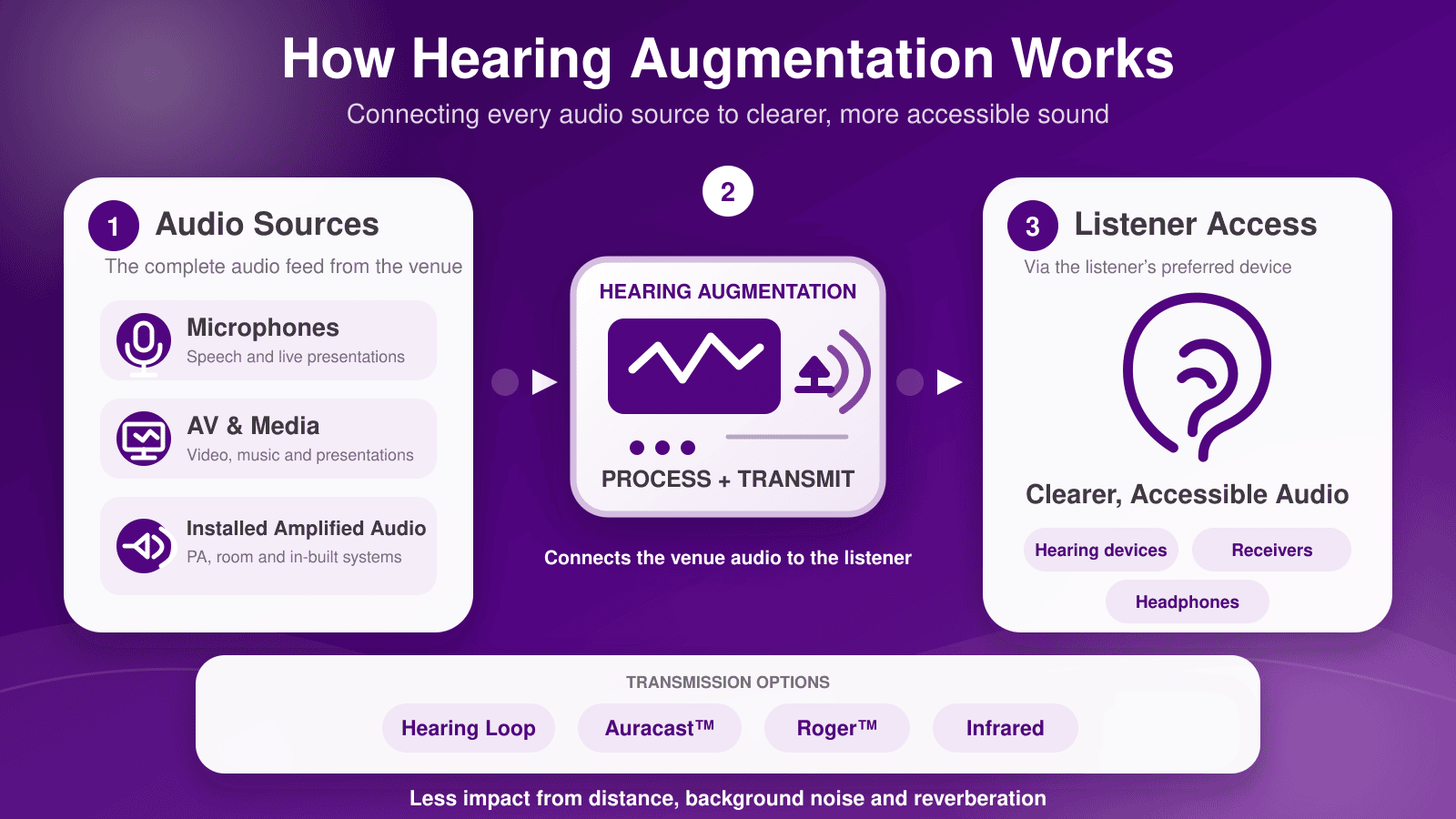
Hearing augmentation uses assistive listening technology to improve access to speech and audio for people with hearing loss or anyone who experiences difficulty understanding speech in challenging listening environments.
Unlike a conventional public address system, hearing augmentation delivers clearer sound directly to, or closer to, the listener. This helps reduce the effects of distance, background noise and poor room acoustics.
Depending on the system, sound may be transmitted through a hearing loop, Auracast™, Roger™ or infrared technology and accessed using compatible hearing aids, cochlear implants, headphones, neckloops or dedicated receivers.
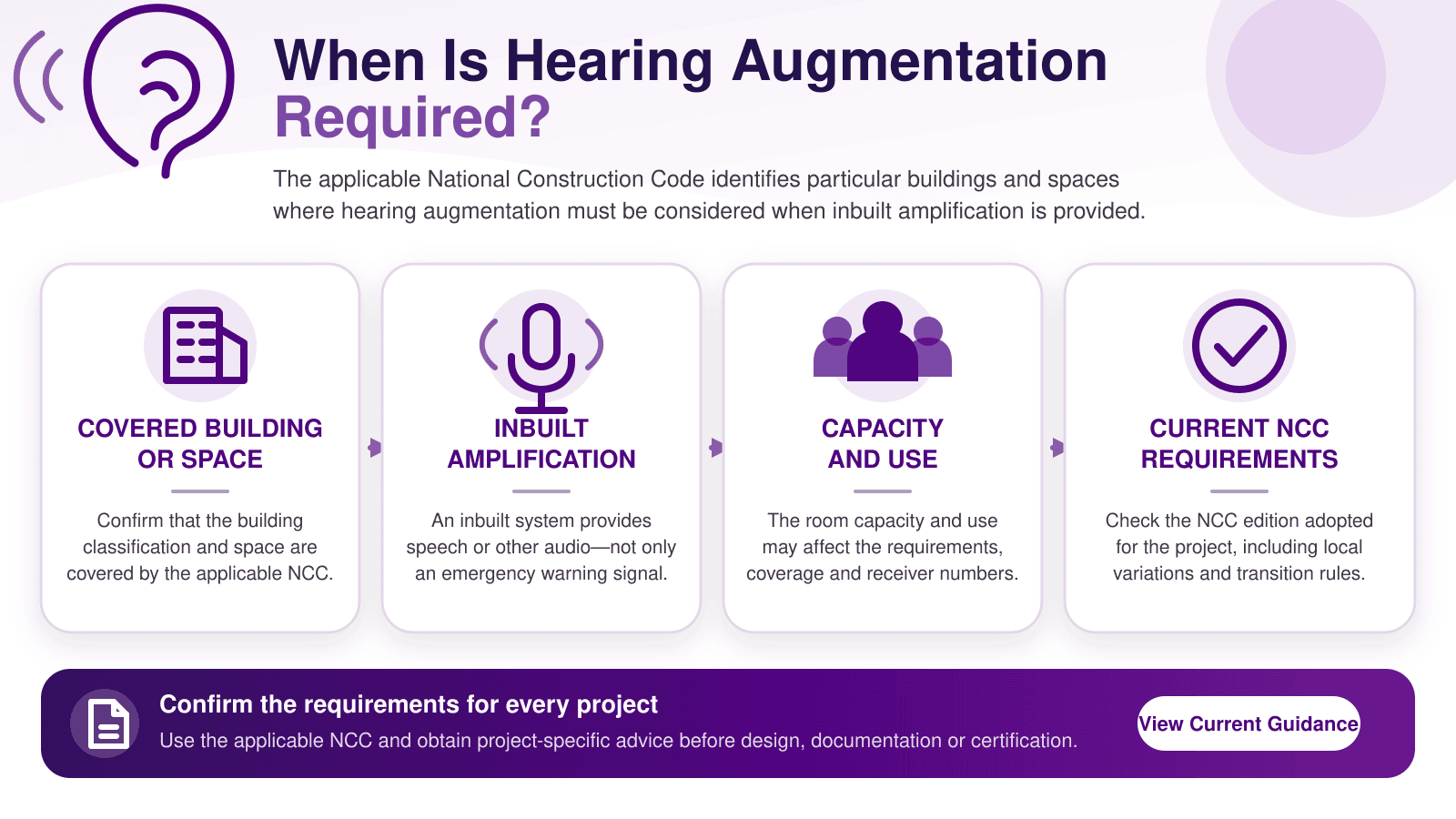
Every conversation deserves to be heard clearly.
For millions of Australians, understanding speech can become difficult long before someone identifies as having a hearing loss. Even people with normal hearing can struggle in challenging listening environments where distance, background noise and poor room acoustics reduce speech clarity.
Hearing augmentation systems are designed to overcome these barriers by delivering clearer speech directly to the listener, improving communication, accessibility and participation in everyday environments.
Four Common Barriers to Understanding Speech
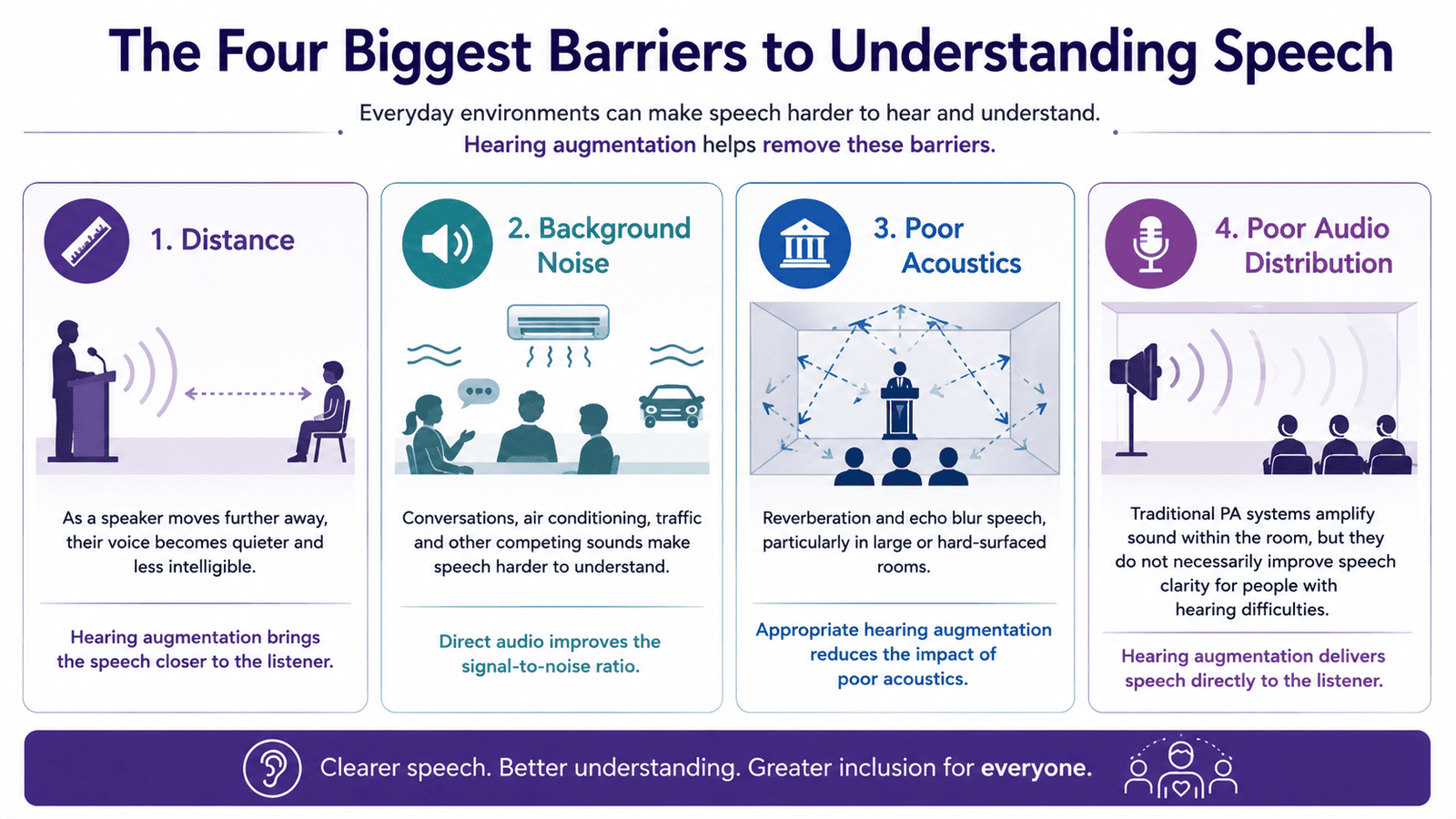
Hearing augmentation reduces these barriers by providing clearer, more direct access to speech and audio.
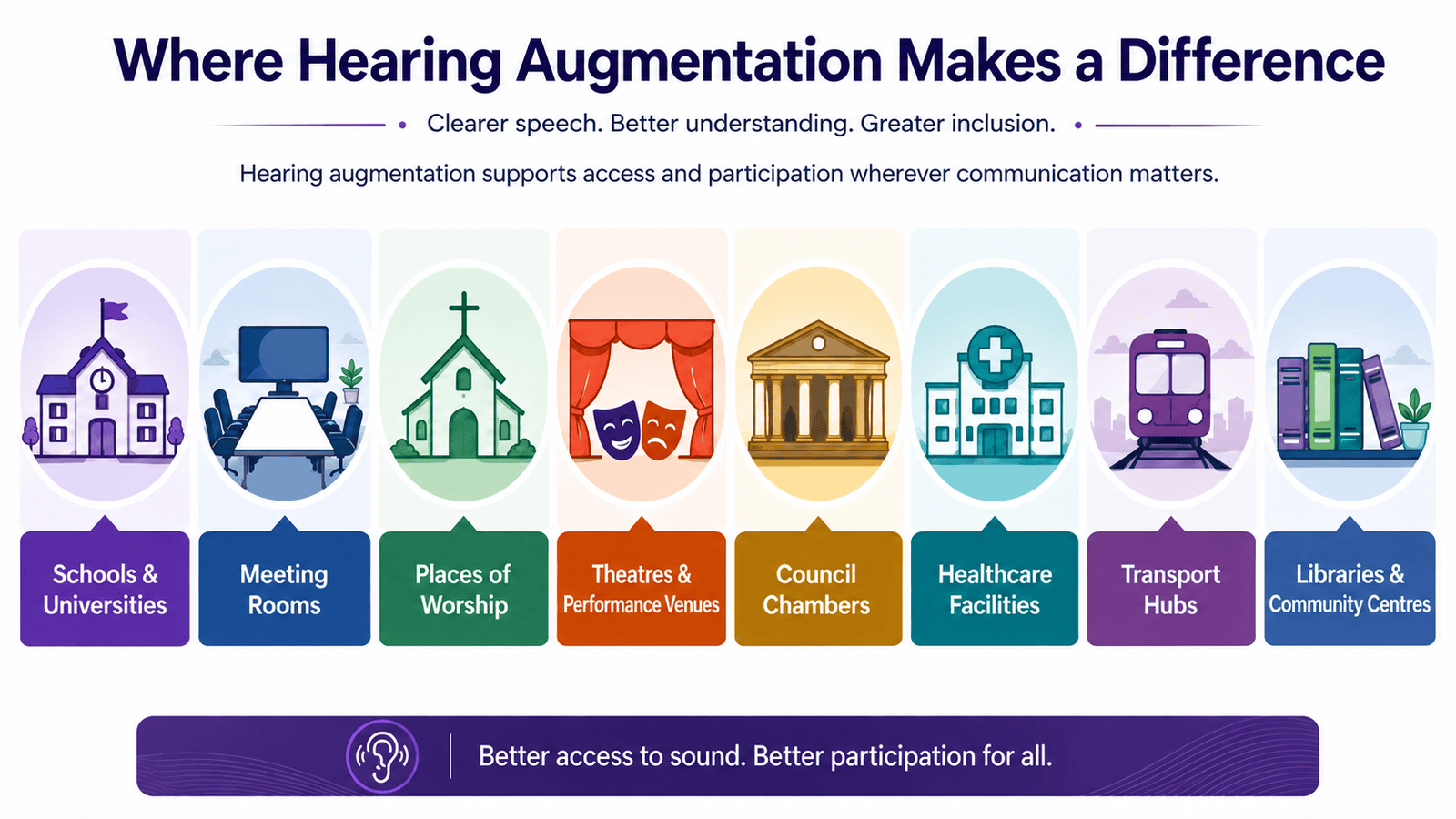
Why Clear Speech Matters to Everyone
Clear communication is about more than hearing sound. It's about understanding speech, participating confidently and remaining connected. When people can hear clearly, they are more likely to contribute to discussions, engage with learning, make informed decisions and enjoy greater independence.
Well-designed hearing augmentation systems support inclusive communication for people of all ages and hearing abilities, creating environments where everyone has equal access to information.
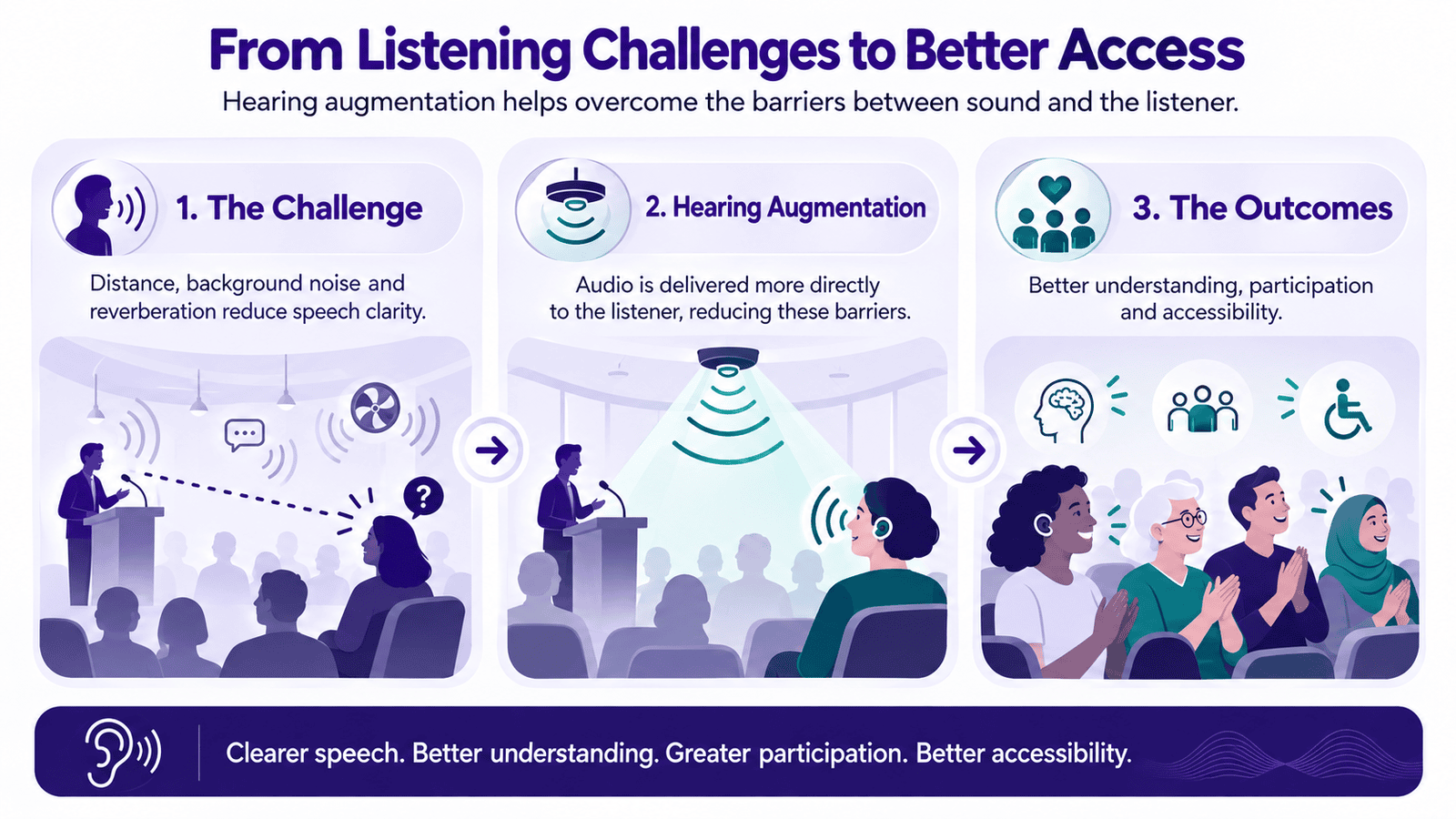
Choosing the Right Hearing Augmentation Technology
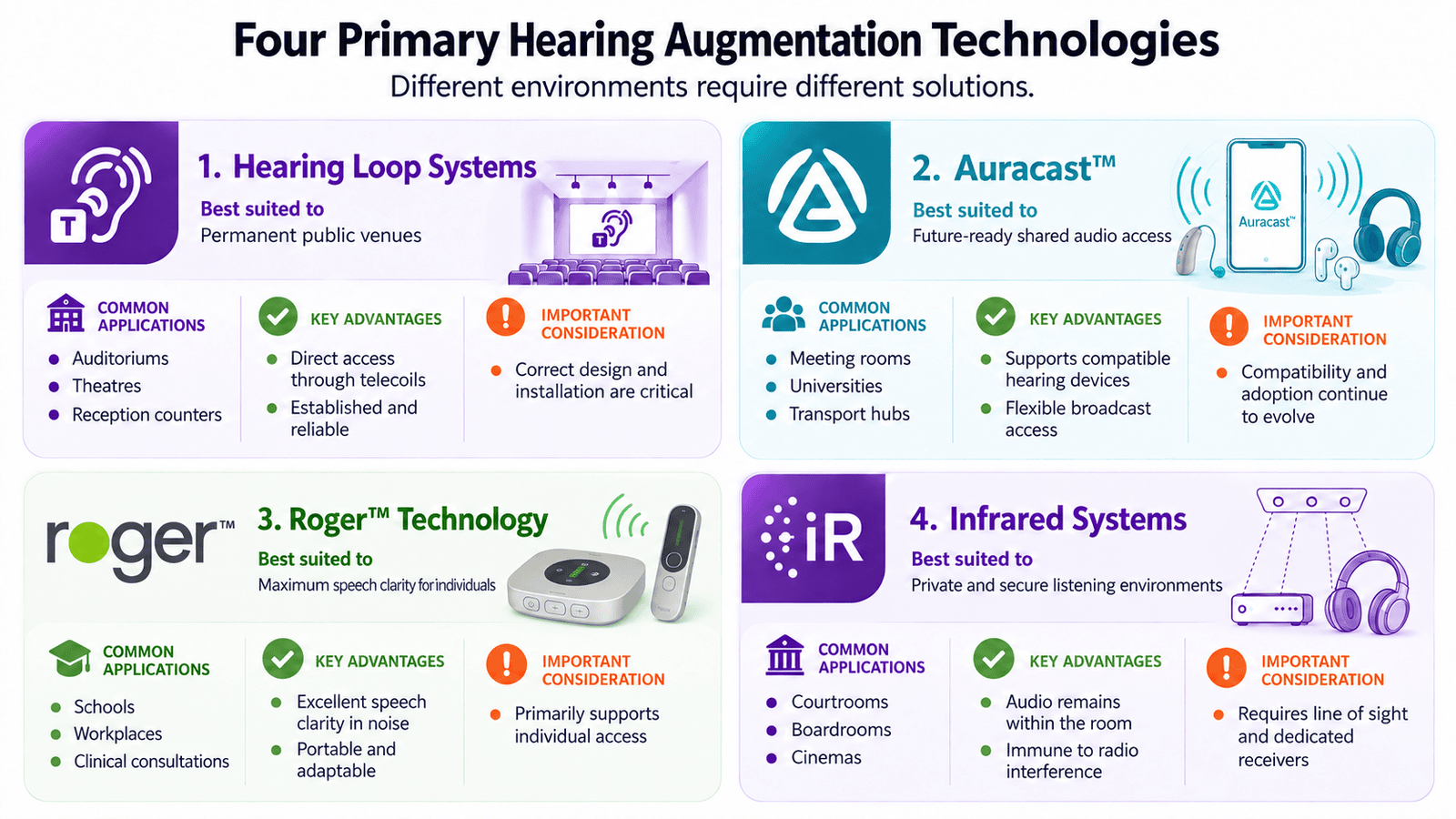
There is no single hearing augmentation system that is suitable for every environment. The best solution depends on the building, the users, the level of accessibility required and the long-term objectives of the organisation.
Hearing Loop Systems
Hearing loops transmit audio through a magnetic field. Listeners receive the sound using telecoil-enabled hearing devices or suitable loop receivers. Coverage and performance depend on correct design, installation and testing.
Roger™ Microphone Systems
Roger microphones capture speech near the speaker and transmit it to hearing devices equipped with compatible Roger receivers. They can support listening when distance or background noise makes speech harder to follow. Receiver requirements must be checked for the exact hearing device.
Auracast™ Broadcast Audio
Auracast broadcasts audio to multiple compatible hearing aids, headphones, earbuds or dedicated receivers. Bluetooth connectivity alone does not establish compatibility. Device support, coverage and how listeners join the broadcast need to be checked.
Infrared Systems
Infrared systems transmit audio using infrared light to dedicated receivers. Listeners access the sound through suitable headphones or compatible neckloops. Emitter placement, room layout and receiver coverage need to be considered during system design.
Independent Hearing Augmentation Advice
Technology is only part of the solution.
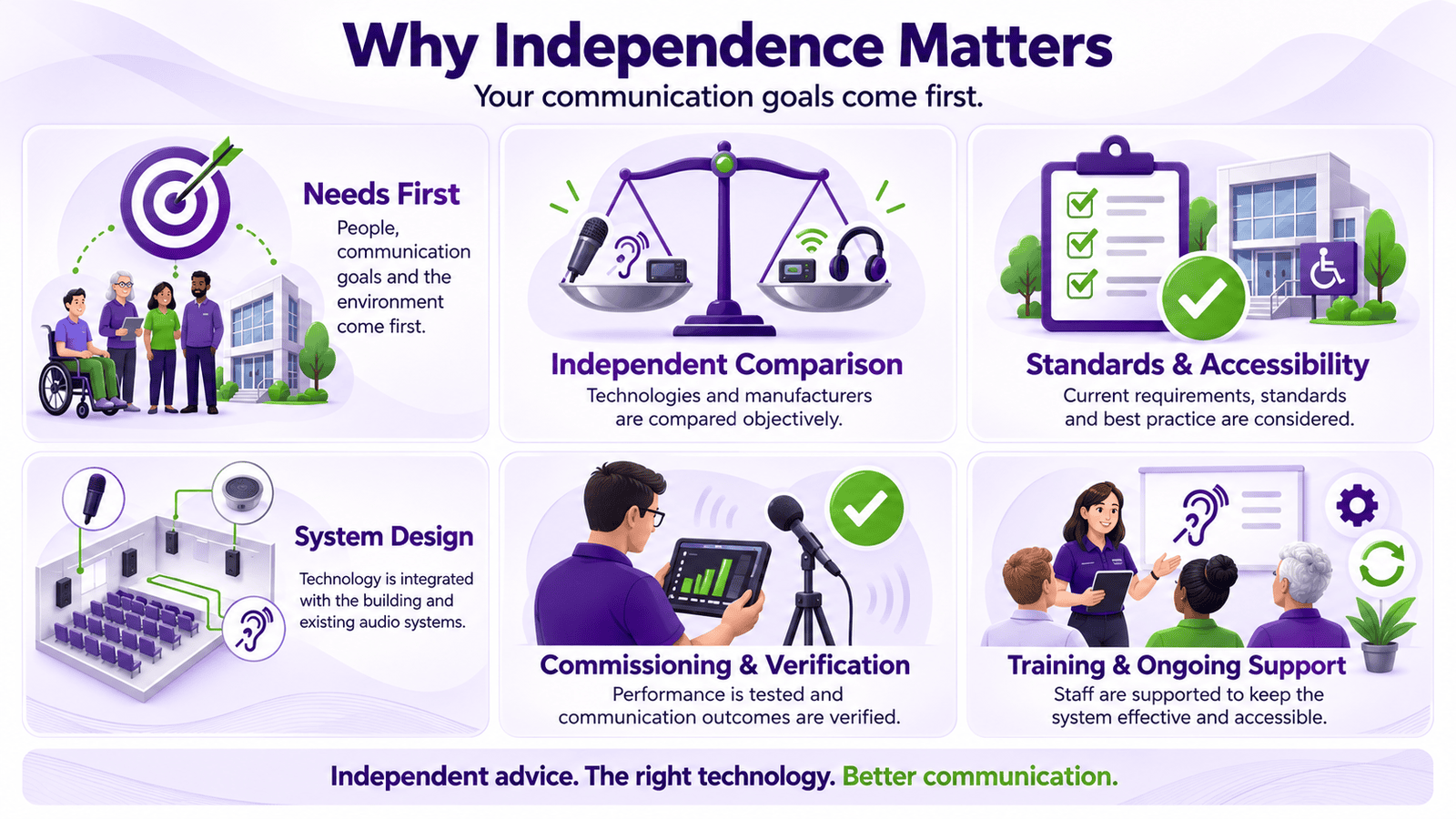
An effective hearing augmentation system must do more than satisfy a technical specification. It needs to integrate with the venue’s existing audio systems, suit the acoustics and building layout, be practical for staff to manage, and provide reliable access for the people using the space.
Because Hear Room is independent of manufacturers and installers, we can objectively compare hearing loops, Auracast™, Roger™ and infrared systems. Our recommendations consider communication outcomes, compatibility, accessibility requirements, ongoing management and long-term value, including hybrid solutions where one technology alone may not be enough.
Why Independence Matters
What We Consider for Every Project
No two venues or listening environments are the same. When developing a hearing augmentation recommendation, Hear Room considers:
- People and accessibility — user needs, communication goals, equitable participation and ease of use.
- Venue and acoustics — the building’s purpose, room layout, background noise and reverberation.
- Technology and integration — existing audio systems, infrastructure, device compatibility and potential hybrid solutions.
- Compliance and performance — current accessibility requirements, relevant standards and measurable communication outcomes.
- Lifecycle and value — budget, maintenance, staff capability, scalability and future technology needs.
Considering these factors together helps us recommend a solution that is practical, effective, easy to manage and able to support reliable communication outcomes over time.
Hear Room works with building owners, facility managers, schools, healthcare providers, government organisations, architects, electrical engineers, audiovisual consultants and installers across Australia.
Why Hear Room?
Hear Room combines audiology-led expertise with practical experience in hearing augmentation, assistive listening technology and accessible communication.
Led by Jim Russell, Principal Hearing Rehabilitation Audiologist, Hear Room brings more than 20 years of experience across clinical audiology, education, hearing technology and system implementation.
- Independent recommendations — advice is based on your users, environment and communication goals, without being tied to a particular manufacturer or installer.
- Audiology-led understanding — recommendations consider how people hear, understand speech and access communication in real listening environments.
- End-to-end project support — from initial assessment and system design through to commissioning, verification, training and ongoing support.
- Australia-wide service — supporting schools, workplaces, public buildings, healthcare facilities and community organisations across Australia.
Whether you are planning a new building, upgrading an existing system or reviewing accessibility, Hear Room can help you make an informed and practical decision.